Oct 9th 2025
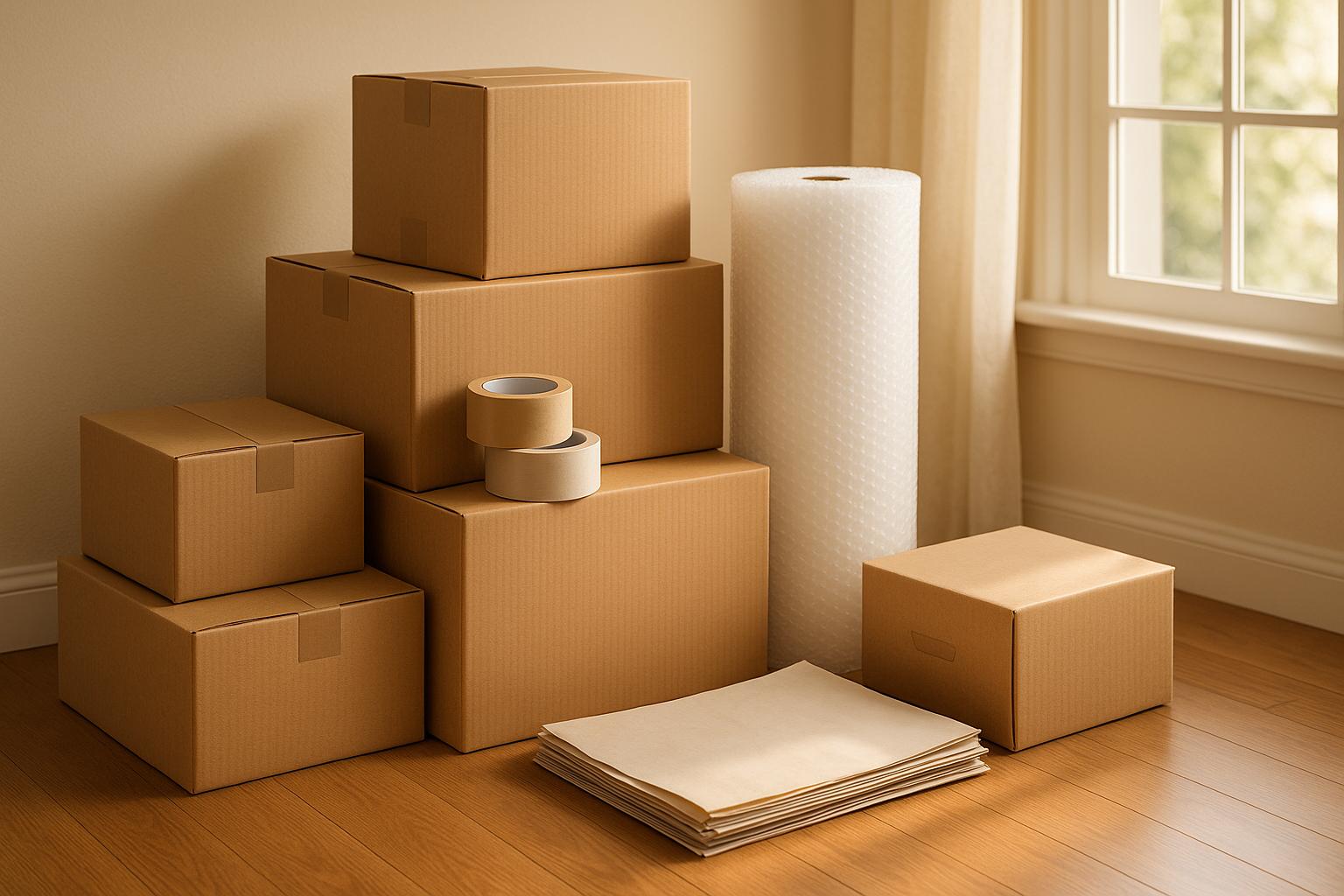
Best Packing Supplies for Residential Moves
Moving is stressful, but having the right packing supplies makes all the difference. Sturdy boxes, strong tape, and proper cushioning help protect your items and keep the process organized. Skimping on materials can lead to broken belongings and added costs. Here’s what you need to know:
- Boxes: Use small ones for heavy items (like books), medium for general items, and large for lightweight, bulky things. Double-wall boxes are great for fragile items.
- Tape & Labels: High-quality packing tape keeps boxes sealed. Label boxes clearly with room names and contents.
- Cushioning Materials: Bubble wrap, packing paper, and air pillows protect fragile items. Wrap delicate pieces twice for extra security.
- Specialty Supplies: Wardrobe boxes for clothes, dish kits for kitchenware, and furniture pads/stretch wrap for large items.
- Where to Buy: Online retailers like Amazon and U-Haul offer convenience, while local stores like Walmart and Home Depot provide quick access. Free options include grocery stores or platforms like Facebook Marketplace.
Pro Tip: Use household items like towels, socks, and blankets to save on packing materials. Avoid overpacking boxes to prevent damage during the move.
With good supplies and smart strategies, you can make your move smoother while protecting your belongings.
Essential Moving Supplies for a Stress-Free Move
Must-Have Packing Supplies for Your Move
The right packing supplies can make the difference between a smooth, stress-free move and a chaotic mess. These essentials are the foundation of an organized packing plan, so it’s worth getting them right.
Moving Boxes
Start with sturdy boxes. Instead of reusing old, worn-out ones, invest in new, heavy-duty cardboard boxes to prevent issues like weakened corners or moisture damage.
- Use small boxes for heavy items like books.
- Pack everyday items such as appliances or decor in medium boxes.
- Reserve large boxes for lightweight, bulky items.
For fragile or valuable belongings, double-wall corrugated boxes are a smart choice. Their extra layer of protection and crush resistance make them a favorite among professional movers.
Packing Tape and Labels
Once you’ve got your boxes, you’ll need to secure them properly. High-quality packing tape is a must - it ensures your boxes stay sealed during every step of the move. Go for professional-grade moving tape and steer clear of alternatives like duct or masking tape, which may not stick well or could leave sticky residue behind.
Keep extra rolls of tape on hand, and use the H-taping method for added durability. This means sealing the center seam and the edges of the flaps.
Clear labeling is just as important. Use a permanent marker to label multiple sides of each box with the room it belongs to and a brief description of its contents. For even easier sorting, try color-coded labels to quickly identify where each box should go.
Cushioning Materials
Protecting fragile items is key, and cushioning materials are your best friend here.
- Bubble wrap: Its air pockets absorb shocks, making it ideal for delicate items. Larger bubbles work well for bulkier objects, while smaller bubbles are perfect for items like glassware or electronics.
- Packing paper: Ink-free paper is great for wrapping items, filling empty spaces, and adding an extra layer of protection.
- Foam peanuts: Though effective, they can be messy. If you prefer an eco-friendly option, look for biodegradable foam peanuts.
- Air pillows: These are perfect for filling large voids and are easy to deflate and dispose of after use.
For extra safety, wrap fragile items in packing paper first and follow up with bubble wrap for a double layer of protection.
Specialty Packing Items for Specific Items
While standard boxes and basic cushioning materials work for most of your belongings, some items require extra care. That’s where specialized packing supplies come in - they tackle challenges that regular materials just can’t handle, offering added protection for your more delicate or bulky possessions.
Wardrobe Boxes
Packing your closet doesn’t have to mean folding every single piece of clothing. Wardrobe boxes make the process much easier. These tall, sturdy boxes come with a built-in hanging bar, allowing you to transfer clothes straight from your closet - hangers and all. They’re especially handy for delicate fabrics like silk, formal attire such as suits and dresses, and heavier seasonal pieces that don’t fold well. Plus, they save you time when unpacking since your clothes stay wrinkle-free and ready to hang.
Dish Saver Kits
Your kitchen is home to some of the most fragile items you own, so protecting them properly is a must. Dish saver kits, often called dish packs, are specifically designed for breakable kitchenware. These kits include dividers and cushioning inserts that create separate compartments for plates, bowls, glasses, and mugs, helping to prevent chips or cracks during the move. To pack effectively, place heavier items at the bottom, wrap each piece individually, and fill any gaps with packing paper. Many professional movers swear by these kits because their design significantly reduces the risk of breakage compared to standard boxes.
Furniture Pads and Stretch Wrap
Large furniture pieces come with their own set of challenges - scratches, dents, or loose parts shifting around during the move. Furniture pads and stretch wrap are your go-to solutions for keeping these items safe.
Furniture pads are thick, quilted blankets that protect surfaces from damage. They’re perfect for wooden furniture, leather upholstery, and even appliances with painted or stainless-steel finishes. Available in various sizes, they provide a layer of cushioning tailored to the item you’re moving.
Stretch wrap, on the other hand, is a clingy plastic film that holds everything securely in place. It’s great for securing furniture pads and keeping loose parts, like drawers or detachable components, from shifting. To use it effectively, wrap the furniture pad around the item first, then secure it with stretch wrap. Start at the bottom and overlap as you work upward for a tight, secure hold. Don’t forget to pay extra attention to corners and edges, as these areas are especially prone to damage during transit.
sbb-itb-be87134
Where to Buy Packing Supplies
Now that you’ve figured out what supplies you’ll need, the next step is deciding where to get them. Your choice will depend on factors like convenience, budget, and how quickly you need the items. Whether you’re shopping online or heading to a store, there are plenty of options to consider.
Online Retailers
If you’re looking for convenience and variety, online retailers like Amazon, U-Haul, Home Depot, and Lowe’s are excellent choices. They offer a wide range of moving supplies, often with bulk discounts and flexible shipping options. U-Haul even has pre-packaged moving kits that bundle commonly needed items, which can save time and effort.
Shopping online also makes it easy to compare prices, check reviews, and hunt for promotions to save money. But if you’re in a hurry or want to see the products in person, local stores are another solid option.
Local Stores
Big-box retailers like Target and Walmart, as well as hardware stores, carry a mix of basic and specialized moving supplies year-round. Hardware stores, in particular, often stock items like furniture dollies and heavy-duty straps. Plus, their staff can be a great resource if you need advice or alternative solutions for your packing needs.
Free and Low-Cost Options
If you’re looking to save even more, consider free or low-cost alternatives. Many grocery and liquor stores are happy to give away sturdy boxes if you ask. Online platforms like Facebook Marketplace and Craigslist often have listings for used moving supplies, and local groups like Freecycle or Buy Nothing can be great for finding free items. Don’t forget to reuse boxes from your own online deliveries - they can be perfect for smaller items.
Tips for Smart Packing
Packing is more than just throwing items into boxes - it’s about staying organized, protecting your belongings, and making the process as smooth as possible. With the right strategies, you can turn a potentially chaotic move into something much more manageable.
Labeling and Categorization
A good labeling system is your best friend during a move. Pick a method that works for you and stick to it. One popular approach is color coding: assign each room a specific color - like red for the master bedroom, blue for the kitchen, and green for the living room. Mark your boxes with colored tape or markers to keep everything clear and consistent.
To make this system work, invest in waterproof permanent markers in a variety of colors and high-quality tape that won’t peel or smudge. If you’re reusing boxes, cover up old labels completely to avoid any confusion.
Label each box as soon as it’s packed and sealed. Include the room it’s destined for, a brief description of the contents, and any special instructions like "FRAGILE" or "THIS SIDE UP." To make unpacking easier, you can even match the colored tape on your boxes with tape on door frames in your new home. Posting a master color key near the entrance will help movers (or friends) know exactly where each box belongs.
Another option is number coding, where you assign each box a unique number and keep a detailed inventory of what’s inside. While this can speed up packing, losing the master list could make unpacking a headache. Many people prefer color coding because the essential details are right on the box, eliminating the need for extra reference lists.
Using Household Items
Why spend extra on packing materials when you already have a house full of them? Everyday household items can double as protective padding, saving you money and reducing waste. For instance:
- Towels and blankets: Wrap dishes or fragile decor to keep them safe.
- Clothing: Use sweaters to cushion picture frames or fill gaps in boxes.
- Socks: Slip them over glasses or other small breakables for added protection.
- Pillows: Use them to pad the edges of boxes or furniture.
- Newspapers and magazines: Great for cushioning non-food items, though avoid using them directly on dishes or anything prone to staining.
Plastic grocery bags can shield items from moisture, while rubber bands and twist ties are perfect for securing cords and keeping small parts together. Even egg cartons can come in handy for protecting tiny, delicate items.
Avoid Overpacking
After organizing and using household items wisely, the next step is managing box weight. Keep boxes under 50 pounds - if you can’t lift it comfortably, it’s too heavy. For dense items like books, use smaller boxes and mix them with lighter materials like linens to balance the load.
Fill empty spaces in your boxes to prevent items from shifting during the move, but avoid overstuffing. If a box bulges or won’t close properly, it’s a sign you’ve packed too much. Use lightweight materials, such as extra clothing or packing paper, to fill gaps rather than cramming in more heavy items.
Before sealing a box, give it a gentle shake. If you hear things moving around, take a moment to repack and add extra cushioning. This small step can save you from dealing with broken or damaged items later.
Conclusion
Using the right supplies alongside smart packing strategies can turn a potentially chaotic move into an organized and efficient experience. Quality materials not only protect your belongings but also help streamline the entire process.
Take the time to plan ahead and choose supplies that suit your specific needs. Whether it’s sturdy boxes or specialty kits, each item plays a role in keeping your move on track. Plus, shopping smartly can help you save money without cutting corners on quality.
Simple steps like labeling boxes clearly, using household items creatively, and avoiding overpacking can make your supplies go further. Starting with reliable materials not only prevents damage but also saves time and effort during the move.
FAQs
What are some affordable ways to get packing supplies for a move?
To cut costs on packing supplies, try looking for free or recycled materials first. Many local retailers, grocery stores, or even community groups often have extra boxes they’re happy to give away. You can also get creative by using items you already have at home - think plastic bins, suitcases, or even towels and blankets to protect fragile belongings. If you need to buy supplies, check out bundled packing kits from discount stores or online shops. These kits usually include essentials like boxes and tape at a lower price. By reusing what you have and shopping smart, you can keep your moving expenses under control.
What’s the best way to protect fragile items during a move?
When moving fragile items, it’s crucial to handle them with care. Start by wrapping each piece separately using bubble wrap or packing paper, ensuring every side is fully covered. Choose sturdy boxes and reinforce the bottoms with strong packing tape to avoid any mishaps. To keep the items from shifting during transit, fill any gaps in the box with cushioning materials like packing peanuts, crumpled paper, or foam inserts. For extra safety, label the boxes as fragile and resist the urge to overpack - this helps maintain the box’s strength and prevents damage.
What are the best ways to label and organize boxes for an easier unpacking process?
To make unpacking easier, start by labeling every side of each box with large, clear writing that notes both the contents and the room it belongs to. Adding color-coded stickers or tape for each room can make it even simpler for movers to know exactly where things should go. Don’t forget to clearly mark boxes with fragile items so they’re handled with extra care.
Another helpful tip is to create a master list that keeps track of what’s in each box and which room it’s meant for. This list can be a lifesaver when you’re trying to find specific items later. Use permanent markers to make sure your labels stay readable throughout the move. These small steps can go a long way in reducing the stress and chaos of unpacking.